
Why the 2026 New ID Is Harder to Forge
The 2026-style Texas ID design raises the bar for counterfeiting by upgrading physical security features, increasing both the cost and technical difficulty of making convincing fakes.
Key Anti-Counterfeit Features
Materials Are Much Harder to Obtain
The new cards use 100% polycarbonate material. This material is created by fusing multiple plastic layers together under extremely high heat and pressure, forming a single solid structure. Unlike older cards, counterfeiters cannot peel layers apart to alter information.
Laser Engraving Technology
All personal data and photos are laser-engraved inside the material, rather than printed on the surface. This means the information cannot be scratched off, erased, or rewritten. Any physical tampering would permanently damage the card.
Hard-to-Copy Tactile Features
The back of the card includes tactile surface elements (such as a raised date of birth). These 3D features typically require industrial equipment to reproduce. Officers and merchants can quickly check authenticity simply by touch.
Optical Color-Shifting Window
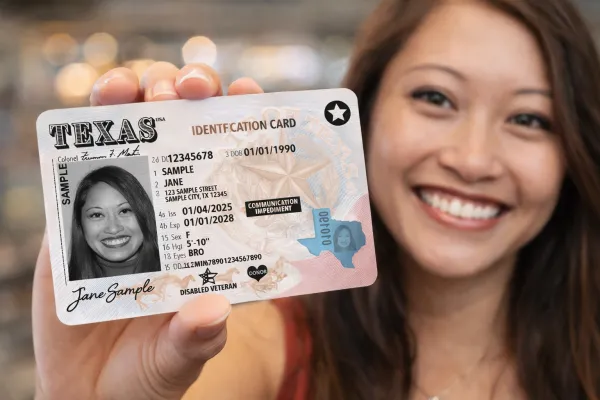
The new ID includes a Texas-shaped window with red-to-blue color-shifting optical effects. This Optical Variable Device (OVD) changes color at different angles. Standard printers and basic counterfeiting tools cannot realistically replicate the effect.
Dual Security Verification
In addition to the main photo on the front, a micro portrait thumbnail is added on the back, providing another layer of visual cross-checking.
Impact on Verifiers
Texas DPS notes that the redesigned layout is easier to read and verify, and the barcode remains compatible with existing scanning systems. This helps merchants and agencies detect counterfeits more accurately.
REAL ID Star Update
One of the most noticeable updates is the black laser-engraved star in the top-right corner. This indicates the credential meets federal REAL ID requirements and replaces the earlier gold star design.
The overall layout is also cleaner, making personal information easier to read at a glance.
Protecting Texans from Identity Theft
Texas officials describe the security upgrades as part of an ongoing effort to protect residents from identity theft and reduce illegal ID circulation. Durable polycarbonate construction and embedded security elements are intended to make tampering obvious and counterfeiting far more expensive.
UT Austin vs Texas A&M: Policy Differences
Institutional Culture and Code Focus

UT Austin generally uses a modern student conduct framework. Fake ID cases may be categorized as providing false information, with more emphasis on legal process and risk-based outcomes.
Off-Campus Violations
UT Austin may get involved if off-campus behavior substantially impacts university interests, but often expects students to address legal matters first. TAMU may initiate student conduct processes earlier and more aggressively, reflecting its values-based expectations.
Governance Structure
The UT System and Texas A&M System are separate public entities. Each Board of Regents sets policy authority, and campuses may implement discipline with some local variation.
Typical Discipline Differences
For a first offense, UT Austin may lean toward warnings or education programs, while TAMU may impose conduct probation even for initial violations. For severe fraud (such as academic record forgery), both schools may apply suspension or expulsion.
Old ID Validity
Your old ID remains valid until its expiration date. Texas DPS indicates that older designs do not need to be replaced early unless you choose to.
For air travel, if your current card already has the REAL ID star, it remains acceptable for federal identification purposes after the REAL ID enforcement date. Police, banks, and merchants must accept a valid, unexpired ID.
How to Replace with the New ID & Why Replace Early
How to Replace

Why Replace Early
Some people replace early for improved durability (polycarbonate is tougher and less likely to peel or crack) and added protection against identity theft due to embedded security features like laser engraving and tactile elements.