1. 2026 California Mobile Driver’s License (mDL)
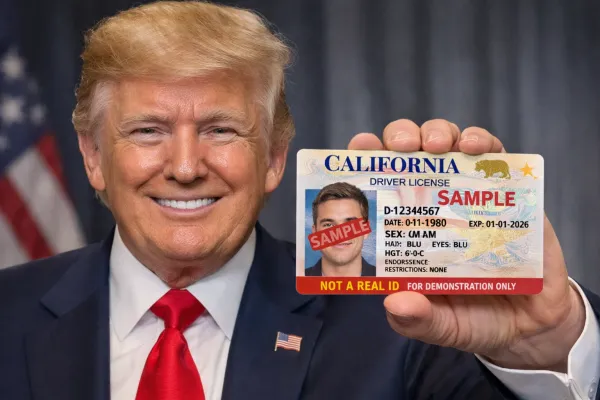
California is currently running a pilot program valid through June 30, 2026, allowing residents to store a scannable digital version of their driver’s license or ID on a smartphone.
Official app:
Download and register through the CA DMV Wallet — this is the latest official method.
Digital wallets:
California driver’s licenses and IDs can now be added to Apple Wallet and Google Wallet.
How it’s used:
- TSA checkpoints: At participating TSA airport security locations, users can simply tap their phone or scan a QR code.
- Age verification: In certain areas (such as Sacramento), the TruAge feature allows scannable age verification at retail checkout counters.
Important requirement:
You must still carry your physical card, as not all law enforcement agencies or businesses currently accept mDLs.
2. 2026 Physical Card Scanning Capabilities
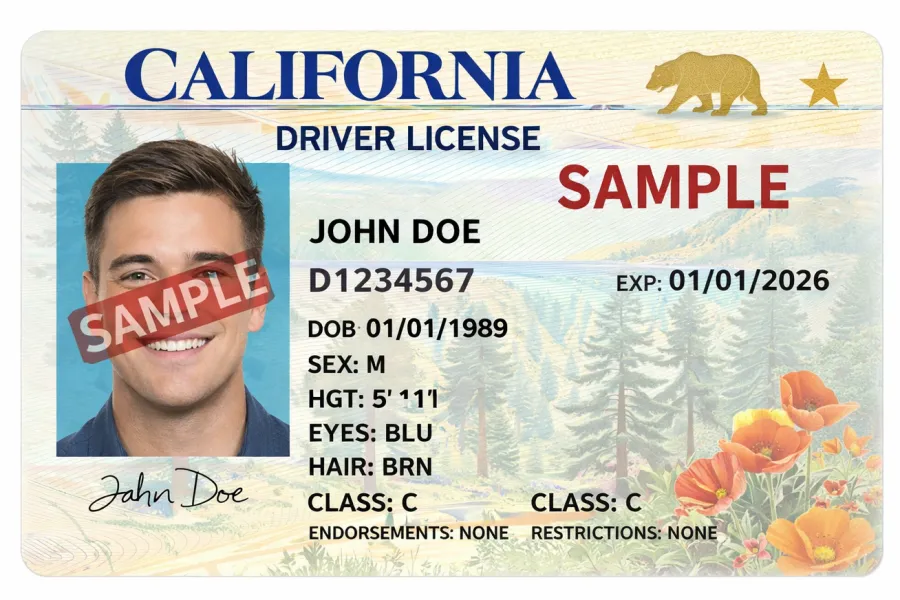
California physical IDs issued or renewed after September 29, 2025 feature a redesigned format with enhanced scannable elements.
2D barcode:
All valid California physical IDs include a PDF417 two-dimensional barcode on the back, containing encrypted data used by law enforcement, banks, and retailers for verification.
Security upgrades:
The latest IDs include a digital security signature embedded in the barcode and remove the legacy magnetic stripe, significantly reducing the risk of counterfeiting.
3. 2026 California License Verification & Compliance
REAL ID:
While standard IDs remain scannable, REAL ID–compliant licenses (marked with a gold bear and star) are required for federal purposes, including boarding U.S. domestic flights starting May 7, 2025.
Scanning regulations:
California businesses may scan IDs to verify age or identity, but state law regulates how personal identifiable information (PII) may be collected, stored, and retained.
Live Scan fingerprinting:
For background checks related to employment or license applications, California uses the Live Scan process to capture fingerprints and transmit them electronically to the Department of Justice.
“The new license adopts next-generation technology to enhance security, while incorporating iconic California design elements such as redwoods, poppies, and coastlines,” said Steve Gordon, Director of the California DMV.
“If your current license or ID is still valid, there is no need to replace it.”
The DMV has integrated California landscape imagery, improved anti-counterfeiting features, and added a digital security signature to one of the rear barcodes, making California one of the first states to adopt this technology.
4. Physical Cards: Next-Generation Anti-Counterfeiting Design (Launching February 2026)
Beginning October 2025, the California DMV started issuing redesigned driver’s licenses and IDs featuring advanced security technologies to combat identity theft:
- Digital Security Signature: California is among the first states to embed a cryptographic digital signature within one of the rear barcodes, allowing instant verification of authenticity and data integrity during scans.
- Magnetic stripe removed: The traditional black magnetic stripe has been completely eliminated due to its vulnerability to cloning and tampering.
- Laser perforation & holograms: Cards include hidden laser-perforated images and angle-shifting holograms visible only under specific lighting conditions.
- Multi-layer security structure: Personal information is protected beneath multiple tamper-resistant layers, leaving visible damage if any attempt is made to alter the card surface.
5. General Trends in Fake ID Usage and Seizures
Reports also suggest that 2–5% of ID scans conducted at alcohol retailers and entertainment venues are flagged as fake by certain legitimate verification systems.
A small number of studies estimate that 4–6% of high school students have attempted to use a fake ID to purchase alcohol, with approximately 50% of users being caught at least once.
U.S. Customs and Border Protection (CBP) has reported significant seizures in certain enforcement periods. For example, in 2025, industry estimates suggested that border officers intercepted approximately 1.1 million counterfeit driver’s licenses in a single quarter.
This figure reflects national-level estimates rather than official case-by-case CBP statistics, but it illustrates the overall scale.
Localized seizure reports are also periodically released (e.g., 984 counterfeit licenses seized in one week at the O’Hare International Mail Facility), highlighting the continued prevalence of fraudulent IDs in international mail and cargo shipments.
An audit by the Department of Homeland Security’s oversight office found that between FY 2022 and FY 2025, border checkpoints and patrol agents identified 7,754 fraudulent documents, including altered or counterfeit passports, birth certificates, and driver’s licenses.
6. Additional Penalties for Minors Using Fake IDs
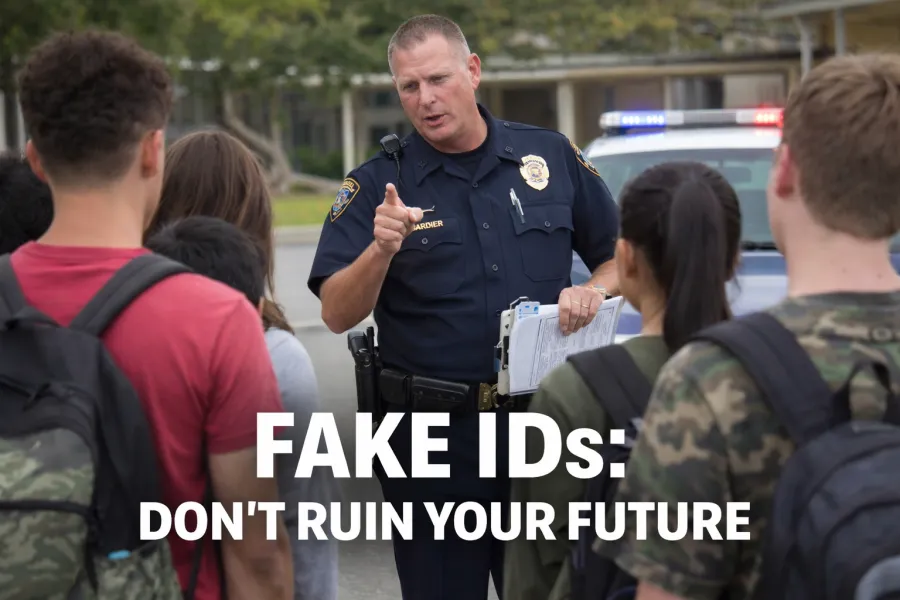
- First offense: Minimum $250 fine + 24–32 hours of community service
- Subsequent offenses: Minimum $500 fine + 36–48 hours of community service
- Driver’s license suspension: Up to 1 year, even if you do not yet hold a license
These penalties are separate from the criminal liability associated with possessing or using a fake ID, meaning multiple penalties may apply simultaneously.
7. Key Takeaways
- California’s mDL program runs through June 30, 2026, but physical IDs are still required in many situations.
- New California physical IDs issued after September 29, 2025 include upgraded scannable and anti-fraud features.
- REAL ID is required for federal uses such as domestic flights starting May 7, 2025.
- Businesses may scan IDs, but handling and retention of PII is regulated.
- Fake ID enforcement and seizure activity remains significant nationwide, including at borders and mail facilities.
- Under-21 fake ID use can trigger additional penalties under BPC 25661.
8. Disclaimer
This content is provided for general informational purposes only and does not constitute legal advice. Laws and policies may change, and enforcement practices can vary by jurisdiction. For official guidance, consult the California DMV, applicable state statutes, or a qualified attorney.